Every vehicle in your fleet needs to pass inspections on time, but pulling drivers off their routes to sit at an inspection station eats into your bottom line. Virtual vehicle inspection services let you handle those required checks remotely, keeping your vehicles on the road and your schedule intact.
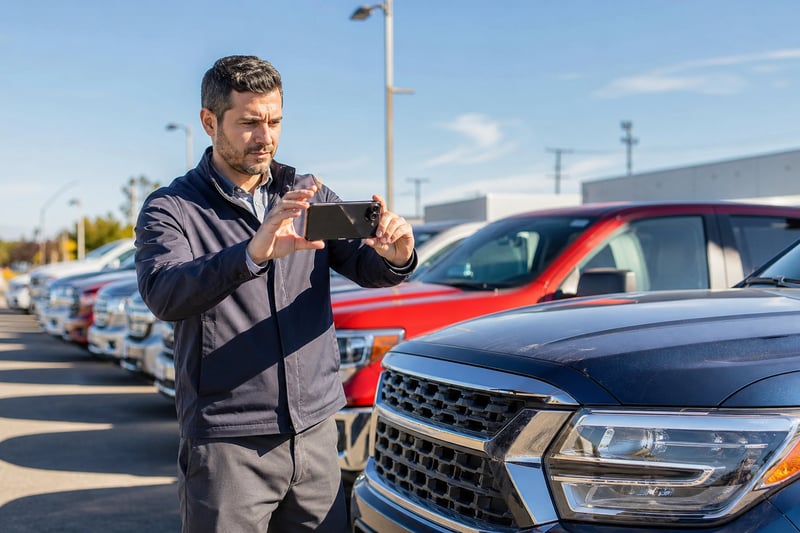
TinkerDIY connects your fleet drivers with ASE-certified mechanics over live video for guided inspections that take minutes, not hours. Below, we'll compare five virtual inspection options for fleet owners and operators, break down what each one does well, and help you figure out which one fits your operation.
Quick guide: 5 best virtual vehicle inspection services for fleets
- TinkerDIY: The best live-expert inspection platform for fleet preventive maintenance and DOT readiness
- Fleetio: App-based DVIR workflows for fleets already using Fleetio's maintenance software
- Yoshi Mobility: Scheduled live-video inspections with ASE-certified inspectors for commercial vehicles
- Chex.AI: AI-driven photo capture with automated damage detection for large fleets
- DriveReady: Quick video-call inspections focused on rideshare and car-sharing drivers
How we chose the best virtual vehicle inspection services for fleets
We dug into dozens of digital inspection platforms and narrowed the list down to five based on what fleet owners care about most. Every service here was measured against the same criteria, so you can stack them up fairly.
- Live expert access: Can your drivers talk to a real person during the inspection? Real-time guidance cuts down on failed inspections and repeat visits.
- Fleet-scale scheduling: Does the platform support bulk scheduling for multiple vehicles and drivers from a single dashboard?
- DOT and FMCSA readiness: Can the platform produce audit-ready electronic Driver Vehicle Inspection Reports (eDVIRs) that meet federal requirements? According to the FMCSA's 2026 eDVIR final rule, electronic completion is now explicitly authorized, making digital compliance records essential for modern fleets.
- Preventive maintenance integration: Does the inspection process connect with your existing maintenance workflows so flagged issues get routed to your shop?
- Speed and convenience: How quickly can a driver complete an inspection from their phone, and how fast do results come back?
- Compliance documentation: Does the service generate signed, timestamped reports you can store for audits and insurance?
The 5 best virtual vehicle inspection services for fleet owners
1. TinkerDIY: Best overall virtual vehicle inspection service for fleets
TinkerDIY gives your fleet drivers direct, live access to ASE-certified Tinker Experts over video. Every inspection is guided in real time, so your drivers know exactly what to show, how to angle the camera, and what each checkpoint means.
This is where TinkerDIY stands apart from app-only platforms. Instead of leaving your drivers to upload photos and hope for the best, a Tinker Expert walks them through each step. Questions get answered on the spot, and missed items get corrected before the inspection ends.
For fleet operators managing multiple vehicles across different locations, TinkerDIY's fleet solutions allow you to coordinate inspections remotely. Drivers complete their checks from parking lots, fleet yards, or job sites. There's no need to send vehicles to a shop or schedule around limited appointment windows.
TinkerDIY also supports rideshare inspections for Uber, Lyft, and Turo, along with NEMT inspections as well. If your fleet includes gig-economy drivers alongside commercial vehicles, you can run the same inspection process for everyone.
TinkerDIY benefits
- Live ASE-certified expert guidance: Your drivers connect with a real mechanic who guides the entire inspection via video call, reducing errors and re-inspections.
- Remote fleet inspections: Drivers complete fleet vehicle inspections from any location with an internet connection, cutting downtime significantly.
- Multi-platform compliance: The same inspection process covers Uber, Lyft, Turo, and general fleet requirements, so you don't need separate vendors for different vehicle categories. Tinker also supports NEMT inspections.
- On-demand scheduling: No appointment slots to wait for. Drivers start inspections when they're ready, keeping your fleet on the road.
- Digitally signed reports: Each completed inspection generates a signed PDF that's ready for compliance audits and record-keeping.
- Expert matching by make: TinkerDIY matches drivers with mechanics who know their specific vehicle type, which means more accurate assessments.
TinkerDIY pros and cons
Pros:
- Every inspection includes real-time guidance from an ASE-certified mechanic, reducing failed inspections
- TinkerDIY supports fleet, rideshare, and car-sharing inspections from a single platform
- Inspections can be completed in under 15 minutes from a driver's phone
Cons:
- State availability for Uber-specific inspections is currently limited to Michigan, Nevada, and Nebraska
- The platform focuses on inspection and diagnostics rather than full fleet management software (maintenance tracking, fuel logs, etc.)
- Volume-based fleet pricing requires contacting the sales team directly
2. Fleetio: Digital DVIR workflows for maintenance-focused fleets
Fleetio includes a built-in inspection module as part of its fleet maintenance software. Drivers complete pre-trip and post-trip inspections through the Fleetio Go mobile app, using customizable checklists that flag issues and route them to your maintenance team.
The platform works for fleets that already rely on Fleetio for work orders, parts tracking, and service scheduling. Inspection data feeds directly into those workflows, which keeps everything in one place.
Fleetio features
- Configurable inspection forms: You can build checklists that match your fleet's specific vehicle types and compliance needs.
- Auto-generated work orders: When a driver flags a defect, Fleetio creates a maintenance work order automatically, connecting the inspection to your repair pipeline.
- Inspection scheduling: Set recurring inspection intervals by vehicle or group to keep your compliance calendar on track.
Fleetio pros and cons
Pros:
- Inspection data integrates with Fleetio's maintenance and parts management tools
- Customizable checklists adapt to different vehicle types and regulatory needs
- Recurring schedules help prevent missed inspection windows
Cons:
- Inspections are self-guided through the app with no live expert support during the process
- The full inspection module requires a Fleetio subscription, and inspection features are not available on all plan tiers
- Fleetio does not offer rideshare-specific inspection forms accepted by platforms like Uber or Lyft
3. Yoshi Mobility: Scheduled live-video inspections for commercial fleets
Yoshi Mobility offers live-video inspections conducted by ASE-certified inspectors for commercial vehicles and rideshare drivers. Fleet operators can schedule inspections in bulk through a web portal, and results are stored digitally for audit access.
The platform has partnerships with transportation networks and includes DOT annual inspection capabilities that meet FMCSA standards. Yoshi's inspections require a scheduled appointment, with availability depending on inspector capacity.
Yoshi Mobility features
- ASE-certified video inspections: Inspectors conduct real-time video sessions covering DOT-required safety checks.
- Bulk scheduling: Fleet accounts can book multiple inspections at once and manage results from a centralized web portal.
- Digitally signed results: Inspection forms are signed and emailed immediately after the session, supporting audit readiness.
Yoshi Mobility pros and cons
Pros:
- Live-video format with ASE-certified inspectors supports DOT and FMCSA compliance
- Integrated with major transportation networks including Uber
- Bulk scheduling through a fleet portal supports multi-vehicle operations
Cons:
- Inspections require a scheduled appointment, so on-demand availability is not an option
- The platform does not include preventive maintenance tracking or diagnostics beyond the inspection itself
- Rideshare inspection availability varies by state and may not cover all markets
4. Chex.AI: AI-powered photo inspections for large fleets
Chex.AI uses machine vision to scan vehicle photos and detect damage across 163 parts. Drivers complete a guided photo walkaround on their phone, and the AI flags dents, scratches, cracks, and missing components. A human reviewer then signs off on the results.
The platform generates electronic DVIRs with timestamps, driver sign-off, and photo evidence. Chex.AI also offers an API for integration with telematics platforms like Samsara and fleet management tools.
Chex.AI features
- 163-part AI damage detection: Machine vision identifies 21 damage types across the vehicle's exterior and interior.
- Automated eDVIR generation: Each inspection produces a DOT-compliant electronic DVIR with photo evidence and timestamps.
- Fleet dashboard: A centralized view shows compliance status, damage trends, and vehicle condition data across your entire fleet.
Chex.AI pros and cons
Pros:
- AI scans vehicles at 95 to 99 percent detection accuracy for exterior and interior damage
- Automated eDVIRs with photo evidence support FMCSA audit readiness
- API integration connects with Samsara, Fleetio, and custom fleet systems
Cons:
- Inspections rely on AI photo analysis rather than live interaction with a mechanic, so drivers cannot ask questions during the process
- The platform focuses on damage detection and compliance rather than mechanical assessment or diagnostics
- Photo quality depends on the driver's phone camera and lighting conditions, which can affect accuracy in low-light environments
5. DriveReady: Video-call inspections for rideshare and car-sharing drivers
DriveReady offers ASE-certified virtual inspections over video call for Uber, Lyft, Turo, and Wingz drivers. The process takes about 15 minutes, and drivers receive a signed PDF inspection form by email after passing.
The service is designed primarily for individual rideshare drivers rather than fleet operations. DriveReady does not offer fleet dashboards, bulk scheduling, or inspection rejection tracking for multi-vehicle accounts.
DriveReady features
- ASE-certified video inspections: A trained inspector guides drivers through the required safety checklist on a live video call.
- Same-day scheduling: Appointments are often available the same day, with results delivered immediately after passing.
- Money-back guarantee: If the platform's inspection form is not accepted, DriveReady offers a refund.
DriveReady pros and cons
Pros:
- Video inspections include live guidance from a trained inspector
- Same-day appointments are often available with quick turnaround on results
- Covers Uber, Lyft, Turo, and Wingz inspection requirements in a single session
Cons:
- The service does not include fleet management features like bulk scheduling, dashboards, or multi-vehicle tracking
- DriveReady does not produce DOT-compliant DVIRs for commercial fleet use
- No integration with fleet maintenance tools or telematics platforms
Comparison table: The best virtual vehicle inspection services for fleets
| Service | Live Expert Guidance | Fleet Bulk Scheduling | Rideshare + Fleet Support |
|---|---|---|---|
| TinkerDIY | ✓ | ✓ | ✓ |
| Fleetio | ✗ | ✓ | ✗ |
| Yoshi Mobility | ✓ | ✓ | ✗ |
| Chex.AI | ✗ | ✓ | ✗ |
| DriveReady | ✓ | ✗ | ✗ |
How do virtual inspections help with fleet preventive maintenance?
A thin brake pad or an unevenly wearing tire might not trigger a warning light, but left alone, either one can turn into a roadside breakdown and an out-of-service vehicle. Virtual inspections catch those issues early by putting a trained set of eyes on your fleet at regular intervals.
This kind of early detection keeps your preventive maintenance schedule tight. Instead of waiting for a driver to report something off, you get documented evidence of wear and tear after every inspection cycle.
For you as a fleet owner, that means fewer emergency repairs, less downtime, and lower overall maintenance costs. It also builds a paper trail that shows you're actively monitoring fleet health, which matters when an auditor comes calling.
What do fleet owners need to know about DOT inspection compliance?
The FMCSA finalized a rule in 2026 that explicitly authorizes electronic Driver Vehicle Inspection Reports (eDVIRs). Your drivers can now complete and sign inspection reports digitally, and those records hold up in an audit.
For fleet owners, that shift makes digital inspection platforms more than a nice-to-have. Platforms that generate timestamped, photo-backed reports with driver sign-off meet the documentation standards auditors expect to see.
If you're still using paper inspection forms, now is a good time to switch. Digital records are easier to organize, harder to lose, and faster to pull up on short notice. TinkerDIY generates signed inspection reports you can store and retrieve whenever you need them.
Why TinkerDIY is the best virtual vehicle inspection service for fleets
TinkerDIY gives fleet owners something most digital inspection platforms skip: a real ASE-certified mechanic guiding every inspection in real time. That live connection is what separates a reliable inspection from a checkbox exercise.
When your drivers connect with a Tinker Expert over video, they get immediate feedback, have their questions answered on the spot, and catch issues that automated tools miss entirely. TinkerDIY supports your fleet's DOT readiness by producing signed, timestamped documentation you can pull up for any audit.
With support for fleet vehicles, rideshare drivers, and car-sharing hosts from a single platform, TinkerDIY simplifies inspection management across your entire operation. Ready to get your fleet inspected? Talk to a Tinker Expert today and see how fast your next inspection can be.
FAQs about virtual vehicle inspection services for fleets
What is a virtual vehicle inspection?
A virtual vehicle inspection is a remote safety check completed over video call or through a guided app workflow. TinkerDIY connects your drivers with ASE-certified mechanics who walk them through every checkpoint in real time, so nothing gets missed.
Are virtual inspections accepted for DOT compliance?
Yes. The FMCSA's 2026 final rule explicitly allows electronic DVIRs. Platforms like TinkerDIY generate signed, timestamped digital reports that meet federal documentation requirements for fleet compliance.
How long does a virtual fleet inspection take?
Most virtual inspections take about 15 to 30 minutes depending on the vehicle type and checklist requirements. TinkerDIY's live-expert format keeps the process moving efficiently because drivers get real-time guidance instead of guessing at photo angles.
Can virtual inspections replace in-person DOT annual inspections?
Virtual inspections can satisfy many routine compliance checks and pre-trip or post-trip requirements. Some DOT annual inspections still require in-person verification depending on your state and vehicle class. Check your state's requirements to confirm.
How do virtual inspections support fleet preventive maintenance?
Virtual inspections flag wear and tear, like thin brake pads or uneven tire wear, during routine checks. TinkerDIY's live experts document these findings so you can schedule repairs before a minor issue becomes a costly breakdown.